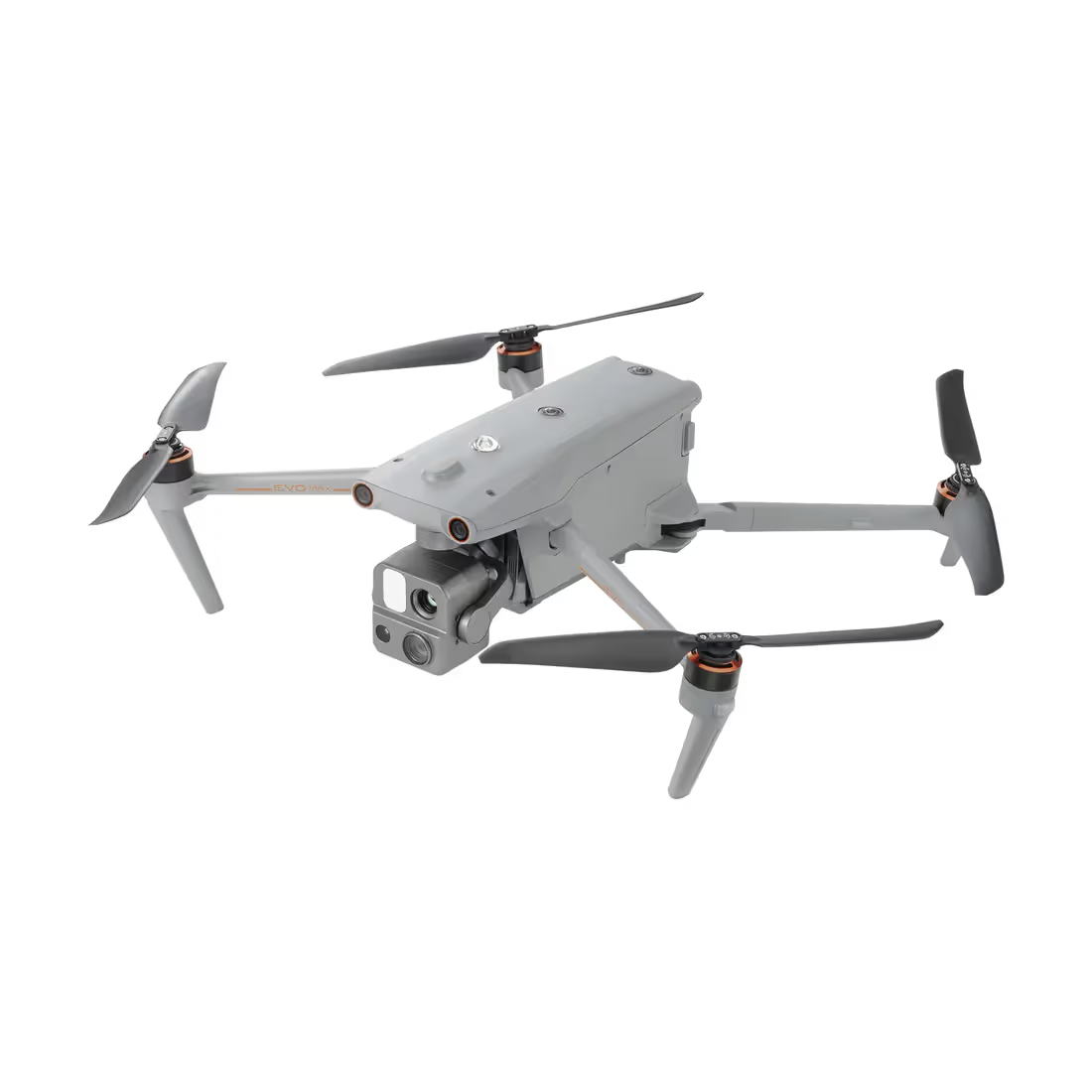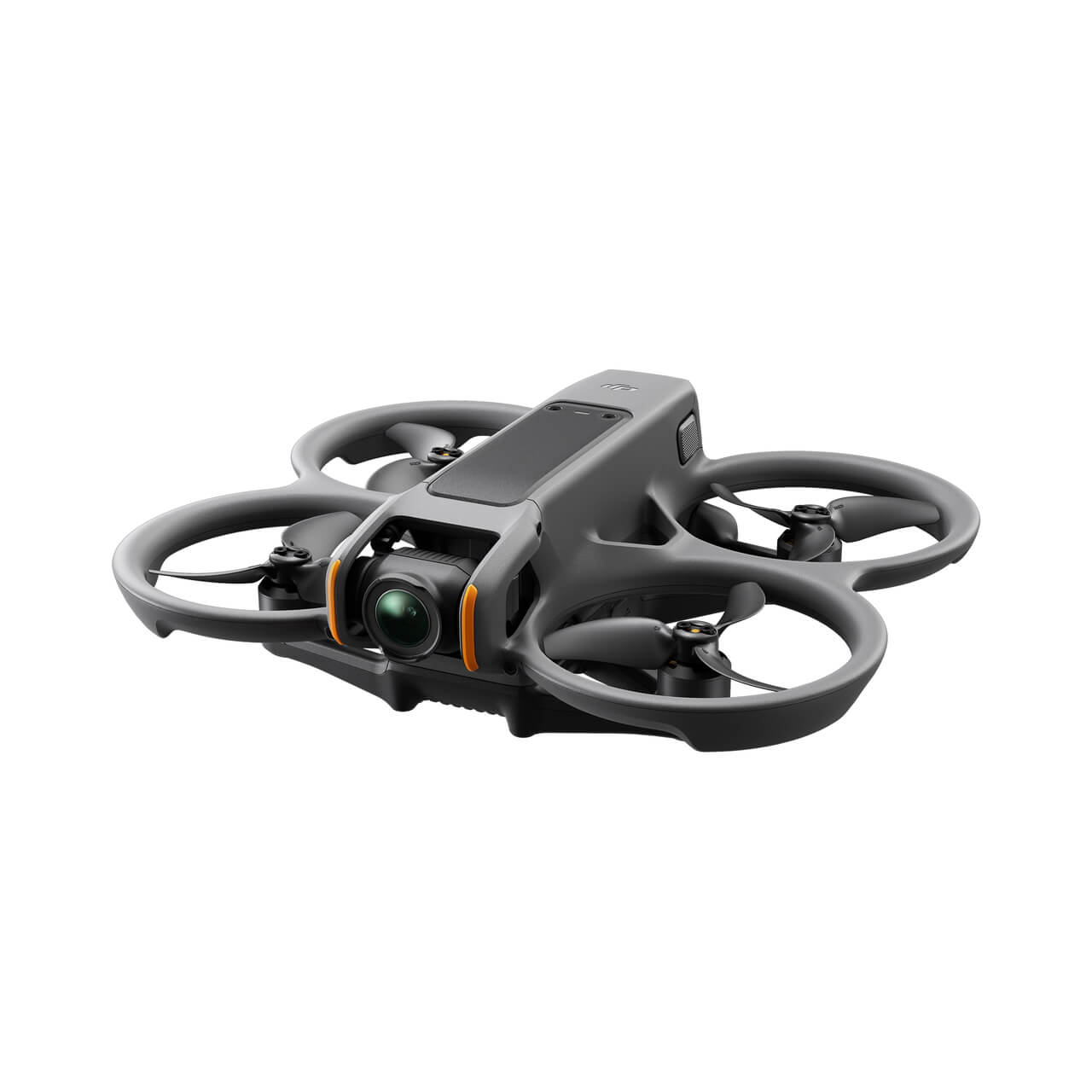

Choosing between the DJI Avata 2 and the DJI Avata 360 comes down to a single question: do you want a focused first-person-view (FPV) experience, or do you want to capture everything around you in one pass? In this guide you will learn how the DJI Avata 2 and Avata 360 differ in camera design, flight performance, transmission, safety features, and best-fit use cases, so you can decide which FPV drone is right for you. Both are immersive cinewhoop-style flyers from DJI, but they target different users.
The short version: the Avata 2 is a classic single-lens FPV drone, while the Avata 360 adds a switchable 360-degree camera system. With two capable platforms on the table, FLYMOTION is here to break down each option and help you find the solution that best fits your needs. The rest of this article breaks down what that means in practice.
Both drones sit above the 250 g threshold that triggers lighter regulatory requirements in many regions, so plan to register and follow the rules that apply where you fly.
The defining gap between these two drones is the camera, and it is bigger than a single spec line suggests.
The Avata 2 is a traditional FPV drone. Its single 1/1.3-inch sensor shoots a fixed, forward-facing 155-degree ultra-wide view that delivers the immersive speed sensation FPV pilots want, recording up to 4K/60fps HDR.
The Avata 360 takes a fundamentally different approach. It is a hybrid platform. It carries two 1-inch-equivalent square sensors that together capture a full 360-degree sphere in 8K/60fps, which you can then reframe in post to pull out multiple shots from a single flight. When you do not need the full sphere, you can switch to Single Lens mode for classic Avata-style 4K filming. This hybrid design is the heart of what sets the 360 apart: it is not locked into one shooting style or one way of flying.
That flexibility carries through to how you fly it. Like the Avata 2, the Avata 360 works with DJI goggles and motion controllers for the full immersive FPV experience, but it can also be flown without FPV goggles using a standard DJI remote controller for a more traditional camera-drone approach. In plain terms: the Avata 2 commits to one great FPV shot in the moment, while the hybrid Avata 360 records everything and lets you decide both the shot and the flying style later.
For pure image quality in a forward shot, the comparison is nuanced. The Avata 2's dedicated single sensor is purpose-built for that forward view. The Avata 360 spreads its capture across a full sphere, so while its 8K 360 resolution is high, 360 cameras generally trade some per-frame quality for total coverage.
The Avata 360 also brings creative tools built around spherical capture, including subject tracking, a virtual gimbal that allows infinite rotation and tilt, and one-tap reframing in the DJI Fly app. The Avata 2 leans on RockSteady and HorizonSteady stabilization to keep its single-lens footage smooth and level.
If your priority is the cleanest possible forward FPV image, the Avata 2 is the focused tool. If your priority is flexibility and never missing an angle, the Avata 360 wins.
Both drones deliver about 23 minutes of max flight time, so endurance is roughly even.
Transmission is where the Avata 360 pulls ahead on paper. It uses DJI's newer O4+ system with a range of up to 20 km, compared to the Avata 2's O4 system rated up to 13 km (FCC). Real-world range is always shorter than the maximum because of interference, wind, and the need to fly home with battery to spare, but the newer system offers more headroom.
The Avata 360 is also the larger and heavier aircraft at about 455 g, versus roughly 377 g for the Avata 2. The lighter Avata 2 is a bit more nimble and portable, while the Avata 360 carries more hardware to support its dual-sensor system.
Safety features are a clear area of separation.
For pilots who fly in tight, complex, or low-light environments, the Avata 360's broader sensing is a meaningful advantage. The Avata 2 remains a safe, guarded platform, but its sensing coverage is narrower.

Work through these steps to land on the right drone.
The DJI Avata 2 is the better pick if you:
The DJI Avata 360 is the better pick if you:
The DJI Avata 2 and Avata 360 are both immersive, guarded FPV drones with similar flight times, but they serve different creators. The Avata 2 is the focused, lighter, more affordable choice for pilots who want a great forward FPV shot. The Avata 360 is the flexible, feature-rich hybrid flagship for creators who want 8K 360-degree capture, stronger obstacle sensing, and the freedom to choose their shot in post.
Match the drone to how you actually create. If you want help selecting the right platform or building out a kit, FLYMOTION can walk you through the options and accessories that fit your goals.
The Avata 2 is a single-lens FPV drone with a fixed 155-degree forward view recording up to 4K/60fps. The Avata 360 is a hybrid platform with a dual-sensor system that captures a full 360-degree sphere in 8K/60fps, which you can reframe in post, while also offering a 4K Single Lens mode for classic FPV-style shots.
Yes, roughly. Both drones are rated for approximately 23 minutes of maximum flight time. Real-world endurance is shorter and depends on wind, flying style, and how much battery margin you reserve to return safely.
The Avata 360 has broader obstacle avoidance. It offers omnidirectional obstacle sensing, including a Nightscape mode for low light, plus forward-facing LiDAR. The Avata 2 relies on downward and backward visual positioning. Both include built-in propeller guards.
It depends on your needs. The Avata 360 is worth the higher price if you want reframable 360-degree capture, stronger obstacle sensing, and O4+ transmission range. If you mainly want a focused, lighter, lower-cost FPV drone for forward-facing shots, the Avata 2 is the better value.
Yes. Both drones are compatible with DJI goggles and motion controllers for an immersive FPV flight experience, and both can also be flown without goggles using standard DJI remote controllers for a more camera-drone-style approach. Always confirm your specific controller and goggle models are supported before buying.


Sales, training & support for drones, robotics & technology.


.jpg)