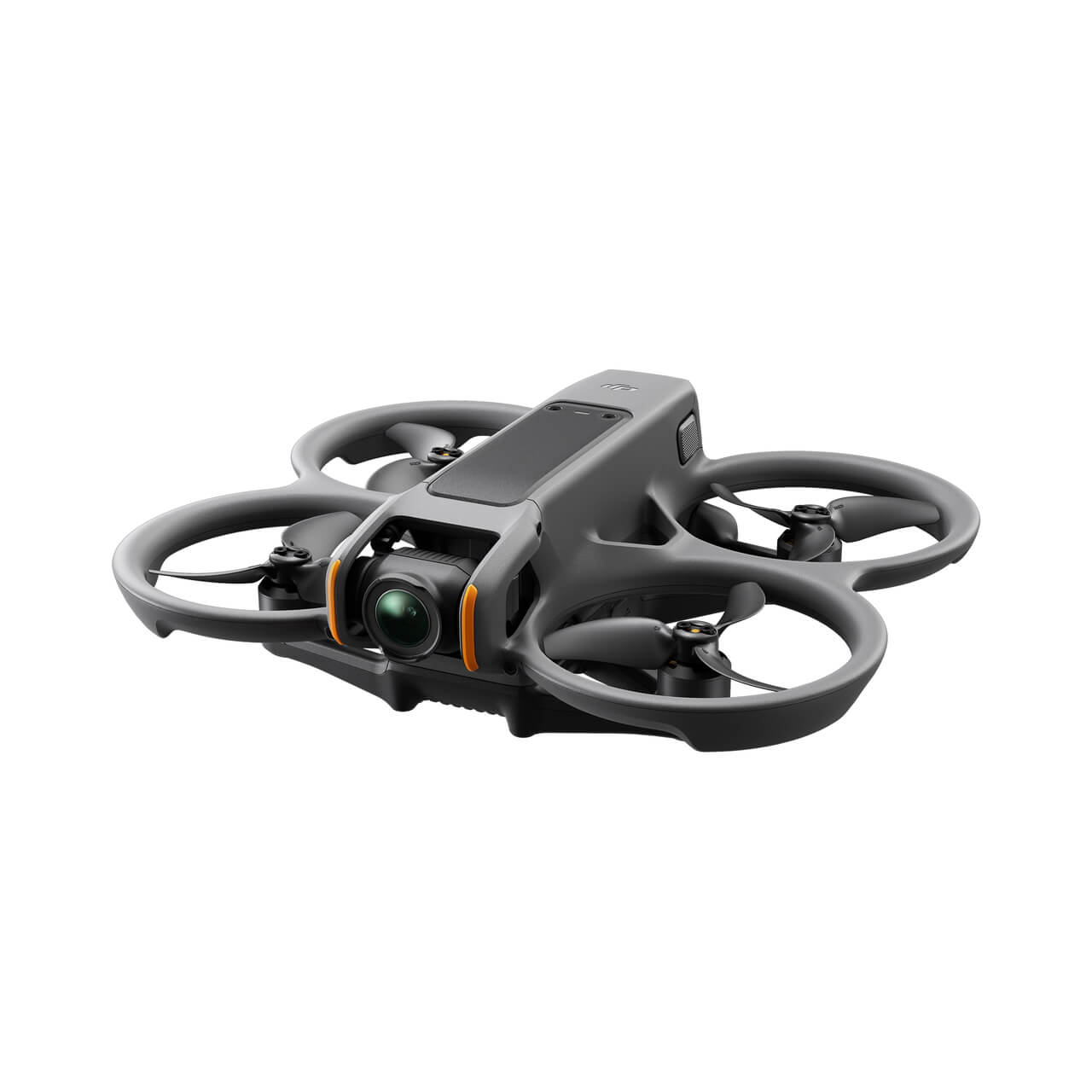
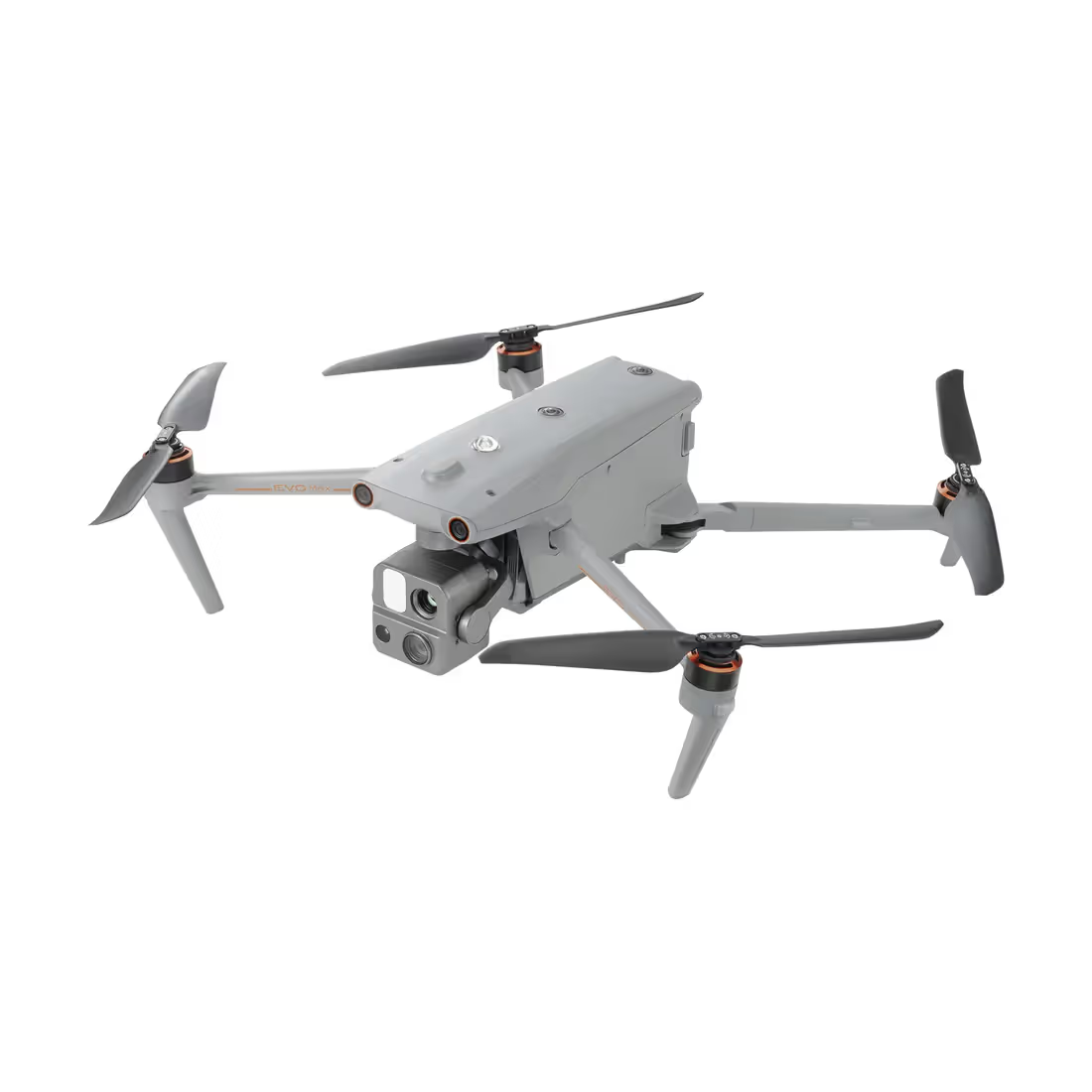
For public safety agencies, the question is no longer just which drone flies best. It is which drone clears procurement, protects sensitive data, and holds up under real mission conditions. That is exactly where Blue UAS drones for public safety enter the conversation, and where the Inspired Flight IF800 Tomcat has earned attention. In this guide you will learn what Blue UAS certification actually means, why it matters for agencies, and how the IF800 Tomcat performs as a secure, U.S.-made platform built for demanding field work.
As a platform-agnostic supplier, FLYMOTION helps agencies match the right aircraft to the right mission, including Blue UAS and NDAA-compliant drones. This article focuses on one of those options and the certification standard behind it.
Blue UAS is a program run by the U.S. Department of Defense's Defense Innovation Unit (DIU). It vets and clears commercial drone platforms against federal cybersecurity, supply-chain, and policy requirements, then publishes approved aircraft on a cleared list for government use.
In plain terms, a Blue UAS drone has been independently reviewed and approved as a trusted option for federal operators. That approval signals secure data handling and a vetted supply chain, which is why the designation carries weight far beyond defense and into the public safety world.
These terms often appear together, but they are not identical.
A platform can be NDAA-compliant without being Blue UAS certified, but a Blue UAS aircraft has cleared a higher, government-managed bar.
Public safety agencies handle sensitive data: incident locations, victim information, critical-infrastructure imagery, and tactical positioning. A drone is a flying data-collection device, so the integrity of its hardware, software, and supply chain is an operational concern, not just a paperwork one.
Choosing a Blue UAS-certified drone gives agencies several advantages:
The IF800 Tomcat is a medium-lift quadcopter from Inspired Flight Technologies, a company that engineers and assembles its aircraft in the United States. The platform is NDAA-compliant, Blue UAS certified, and Green UAS certified, which positions it as a secure, domestically sourced alternative to restricted foreign drones.
It is built around portability and field readiness. A foldable frame, transport-case packaging, and a tool-free payload mounting system make it practical to move and deploy, while its flight stack is built on a CubePilot Cube Blue H7 flight controller with a triple-redundant IMU, dual CubePilot Here4 GNSS modules, and ArduPilot software.
Note that real-world endurance varies with payload weight and conditions. The 54-minute figure represents maximum flight time, and heavier sensors reduce both endurance and service ceiling.
One of the IF800's defining traits is payload versatility. Its Smart Dovetail mounting system and standardized payload bus let operators integrate a wide range of sensors, including:
This one-aircraft, many-missions approach means an agency can adapt the same platform across very different call types without buying a separate drone for each.
The IF800 is offered with more than one ground control station so teams can match the controller to their workflow. Options include the GS-ONE, a handheld GCS with a 7-inch, 2,000-nit sunlight-readable touchscreen, a hot-swappable battery system, and up to five hours of runtime, as well as a Herelink-based controller with a 5.46-inch, 1,000-nit display and an internal battery offering roughly four hours of runtime.
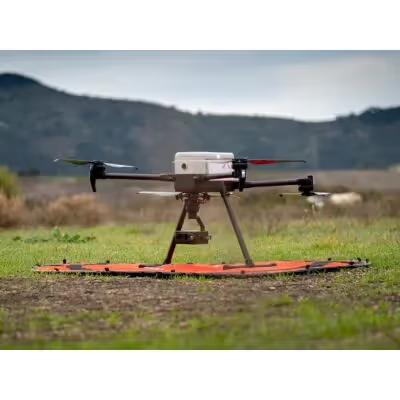
The IF800's combination of endurance, payload range, and compliance maps well to common public safety missions:
Because it is a secure, U.S.-made platform, it is also well suited to agencies operating under procurement rules that require vetted aircraft.
Use these steps to evaluate whether the IF800 Tomcat, or any Blue UAS platform, fits your program.
The IF800 Tomcat is one strong option, but it is not the only one. As a platform-agnostic supplier, FLYMOTION offers and supports a range of Blue UAS and NDAA-compliant aircraft, so if the IF800 is not the right fit, your agency still has clear paths forward. The goal is not to sell a single airframe but to match the right platform to your mission, and FLYMOTION's team can help you compare cleared options and identify the best-fit aircraft for how your team actually operates.
When evaluating Blue UAS drones for public safety, keep these points front of mind:
Blue UAS certification has become a practical filter for public safety agencies that need secure, procurement-ready aircraft. The Inspired Flight IF800 Tomcat shows what a modern, U.S.-made Blue UAS platform can offer: up to 54 minutes of flight time, a 6.6 lb payload capacity, broad sensor support, and a vetted supply chain that simplifies acquisition.
The right next step is to map the IF800's capabilities against your agency's specific missions, payload needs, and procurement requirements. If you want help comparing Blue UAS and NDAA-compliant options, FLYMOTION's team can walk through the platforms and support a decision built around how your team actually operates.
Yes. The IF800 Tomcat is listed by Inspired Flight as Blue UAS certified, NDAA-compliant, and Green UAS certified. Because configurations and variants can differ, agencies should confirm that the specific model they intend to purchase appears on the applicable cleared list before procurement.
NDAA compliance means a drone avoids certain restricted foreign components and manufacturers. Blue UAS is a broader U.S. Defense Innovation Unit vetting and approval process that adds cybersecurity validation and placement on a government-cleared list. A Blue UAS drone is NDAA-compliant, but not every NDAA-compliant drone is Blue UAS certified.
The IF800 Tomcat offers up to 54 minutes of maximum flight time. Actual endurance is lower with heavier payloads and in challenging conditions, and its dual hot-swappable battery system lets crews swap packs to minimize downtime between flights.
The IF800 uses a Smart Dovetail mounting system and a standardized payload bus to support a wide range of sensors, including high-resolution optical and RGB cameras, EO/IR thermal payloads, LiDAR systems, and multispectral sensors. This flexibility lets one aircraft serve multiple mission types.
A Blue UAS drone has cleared a government-managed review for cybersecurity and supply-chain integrity, which supports data security and operational trust. It also eases procurement under rules and grant programs that increasingly favor vetted aircraft, helping agencies avoid future fleet-replacement costs.


Sales, training & support for drones, robotics & technology.


.jpg)